
The bar is a paradox of performance: it is simultaneously theater and factory, a stage where the bartender moves with precision and artistry while executing hundreds of repetitive actions in a shift. A well-designed bar reconciles these seemingly opposed demands. The geometry, materials, and workflow must serve the bartender—enabling speed and grace—while captivating guests. The best bar designs exist at the intersection of hospitality, engineering, and craft, where every element serves both function and beauty.
The Invisible Choreography: Workflow and Movement
Behind every smooth cocktail service lies invisible architecture: workflow. The bar’s dimensions, the heights of different zones, the proximity of equipment, and the placement of ice, glassware, spirits, and tools determine efficiency and prevent fatigue. The well—the bartender’s work surface—should be at a height where arms fall naturally (typically 30–36 inches above the floor), allowing precise movements without strain. Equipment placement follows the principle of movement economy: high-use items like ice and jiggers positioned closest to the bartender’s dominant hand; slower-moving items at arm’s length or above. The bartender’s station is typically divided into zones: the well where mixing occurs, the speed rack holding well spirits, the back bar displaying premium bottles, and secondary storage below or behind. The relationship between the bar top (guest-facing surface, typically 36–42 inches high) and the well beneath creates a subtle privacy barrier—the bartender can work at their own intimate counter height while remaining visible to guests above. This separation matters: it allows focused execution and creates natural delineation between guest and staff space.
Display, Durability, and the Craft of Materials
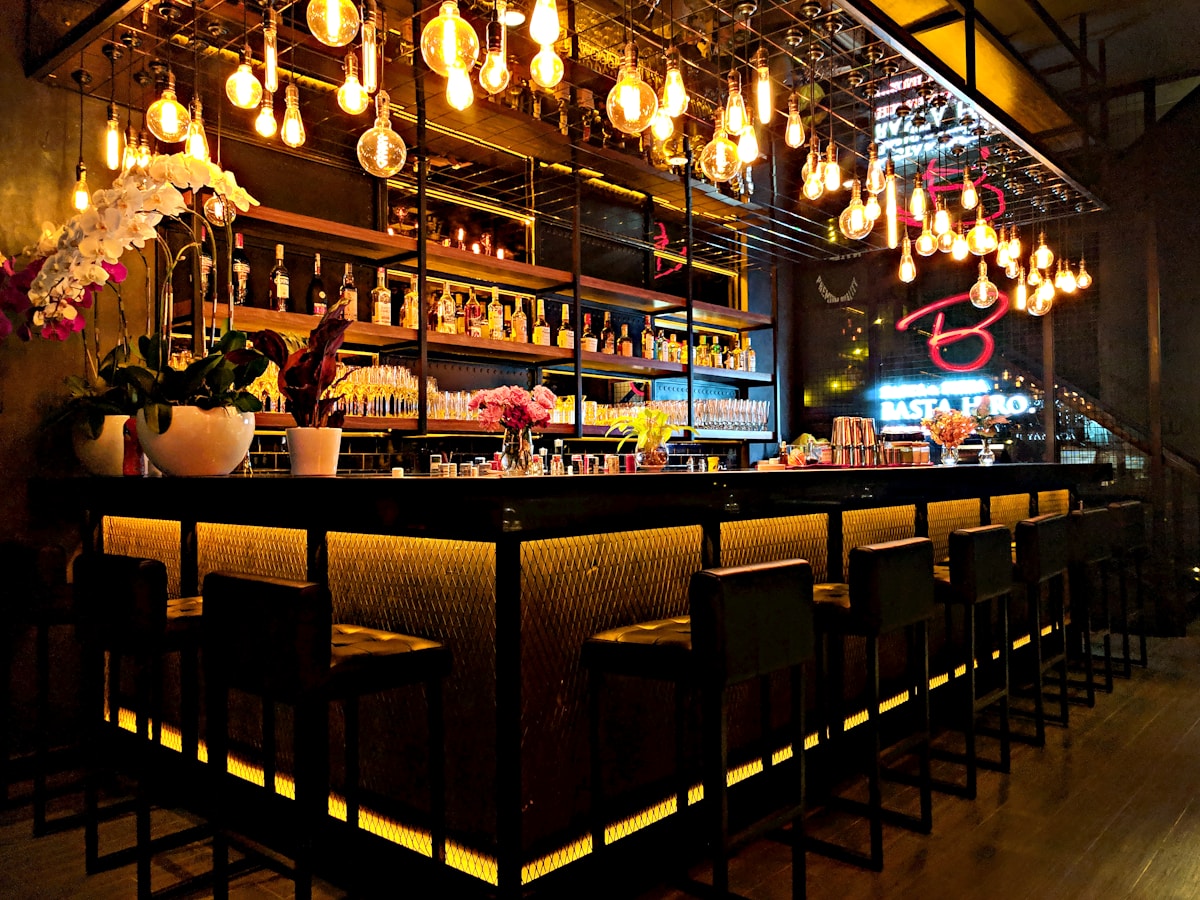
The back bar is designed display. Bottle arrangement, shelving height, and lighting all work together to present the collection as both inventory and art. Bottles should face forward, lit from above or behind to create visual depth and make spirits appear more luminous. The highest shelves hold premium, slower-moving bottles displayed as treasures; working height shelves hold frequently used spirits; lower shelves hold volume bottles and mixers. A tiered arrangement creates visual interest and guides the eye naturally. The bartender’s work surfaces—the well and counter top—endure tremendous punishment: spilled spirits, crushed ice, hot glassware, and constant wetness. Materials must be beautiful and bulletproof. Stainless steel offers durability and professional appearance; natural stone adds warmth but requires sealing and careful maintenance; composite materials can mimic stone while offering superior performance. The rail or foot ring at the bar base serves both function and aesthetics: guests have a place to rest their feet during a long evening of cocktails, and it defines the bar’s visual footprint in the room. Lighting at the bar must flatter both the drinks and the guests: warm accent lights illuminate the spirits and capture the colors of cocktails while softer, more diffuse light faces the guests to create a flattering shadow-free appearance. Backlighting behind bottles creates luminosity; downlighting on the bar top prevents dark shadows under eyes and jawlines. The result is a space where the bartender can work with mastery and guests can linger, admiring both craft and aesthetics.